
Join us at the inaugural System Surveyor THRIVE user conference.
If you’re planning a physical security system, one of the most common questions is: How do you choose the right security camera for each location?
Not every camera is designed for every environment. A camera that works perfectly in a lobby may perform poorly in a parking lot. Likewise, a warehouse, loading dock, office hallway, and building entrance often have completely different surveillance requirements.
The key is matching the camera’s capabilities to the operational needs of the space.
This guide breaks everything down in a clear, practical way so you can understand how security professionals determine the right camera for each location.
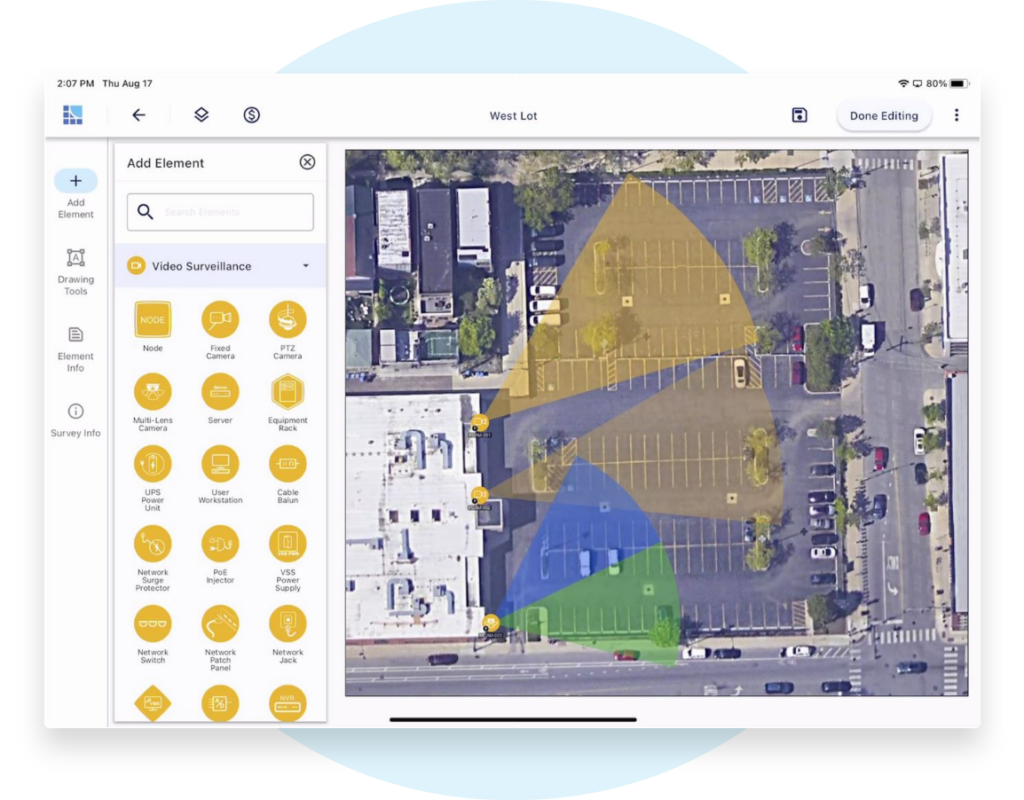
Most security camera selection decisions are based on:
Security professionals often use the industry-standard DORI framework (Detection, Observation, Recognition, and Inspection) to define the level of image detail needed for a specific location. The required objective helps to determine the right camera, lens, and placement.
Choosing the wrong security camera can create:
A properly designed surveillance system uses different camera types for different security objectives.
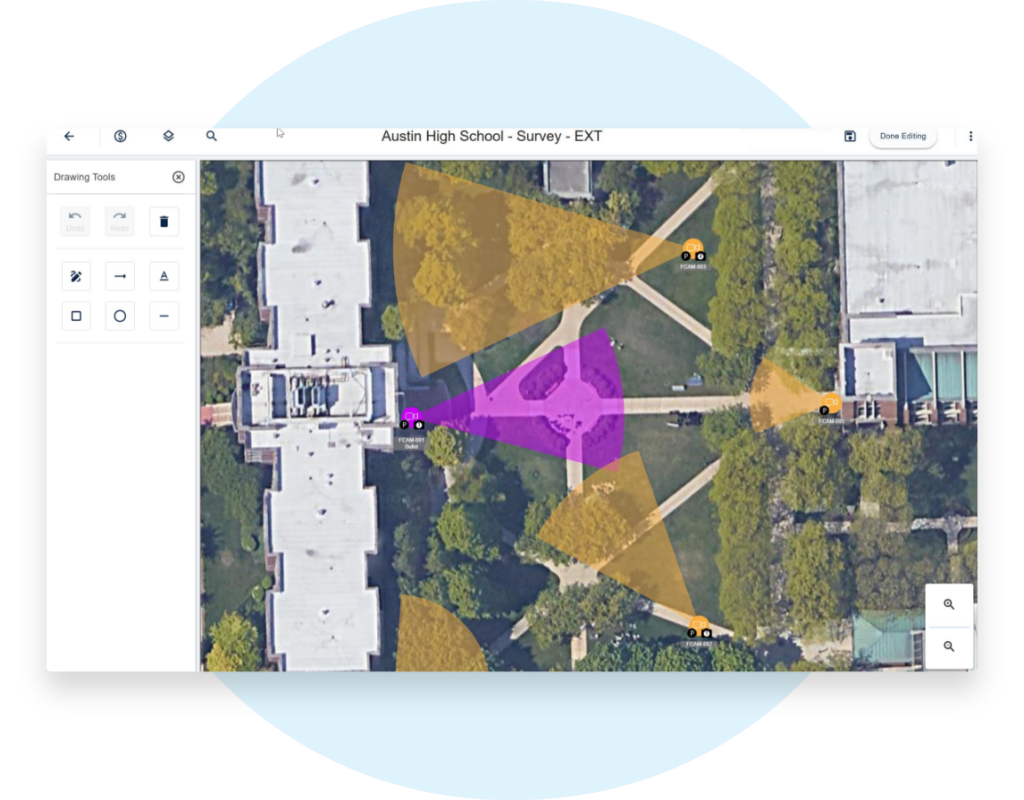
Selecting the right security cameras is key to any secure physical security system.
Before selecting a camera, determine what the camera needs to accomplish.
Common Objectives Include
Every location presents unique challenges.
Questions to Ask
Building entrances are among the most important locations in any physical security system.
What Matters Most
At entrances, organizations typically want:
Parking lots present different challenges.
Typical Requirements
Include:
Hallways create natural traffic funnels.
Common Objectives
May include:
Hallway cameras often benefit from:
These locations are often easier to monitor than open spaces.
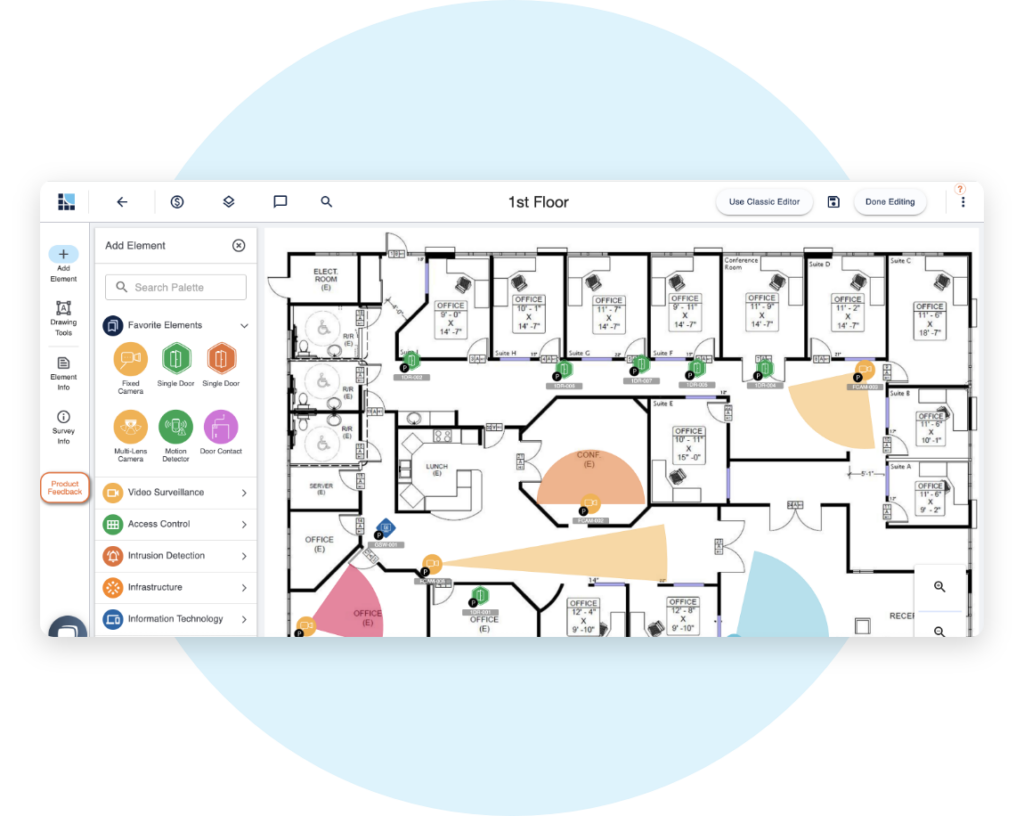
Understanding the process helps teams choose the right camera for each location before installation begins.
Determine whether each camera will be installed indoors or outdoors and account for weather, lighting, temperature, and coverage needs.
Match the camera style to the location, such as dome cameras for interior spaces, bullet cameras for exteriors, PTZ cameras for large areas, or multi-sensor cameras for wider coverage.
Review dark areas, bright windows, direct sunlight, nighttime visibility, and shadows that may affect camera performance.
Document viewing direction, coverage goals, mounting height, obstructions, and infrastructure requirements before finalizing placement.
Place cameras on a digital floor plan so teams can visualize coverage, document requirements, collaborate with stakeholders, and reduce installation surprises.
Many surveillance projects experience problems because of poor planning.
Common mistakes include:
Camera selection should always be driven by operational requirements, not simply product specifications.
Better camera planning starts with clear security objectives and accurate site documentation.
Important tips include:
Camera planning should focus on usable coverage, clear documentation, and the operational needs of each location.
Not necessarily. Resolution is important, but camera placement, lighting, and field of view often have a greater impact on usable video.
Usually not. Different locations often require different camera types and configurations.
A site survey and camera placement plan can help identify blind spots and verify coverage before installation.
The most important factor is understanding the security objective for that location and selecting a camera that supports that goal.