
Join us at the inaugural System Surveyor THRIVE user conference.
If you’re planning a physical security system for one or multiple facilities, a common question is: What is a digital site survey for physical security and why is it important?
A digital site survey helps system integrators and technology directors assess buildings, entrances, cameras, access control points, and vulnerabilities using modern software to design a physical security system.
This guide breaks everything down in a clear, practical way so you can understand how it works and why it matters.
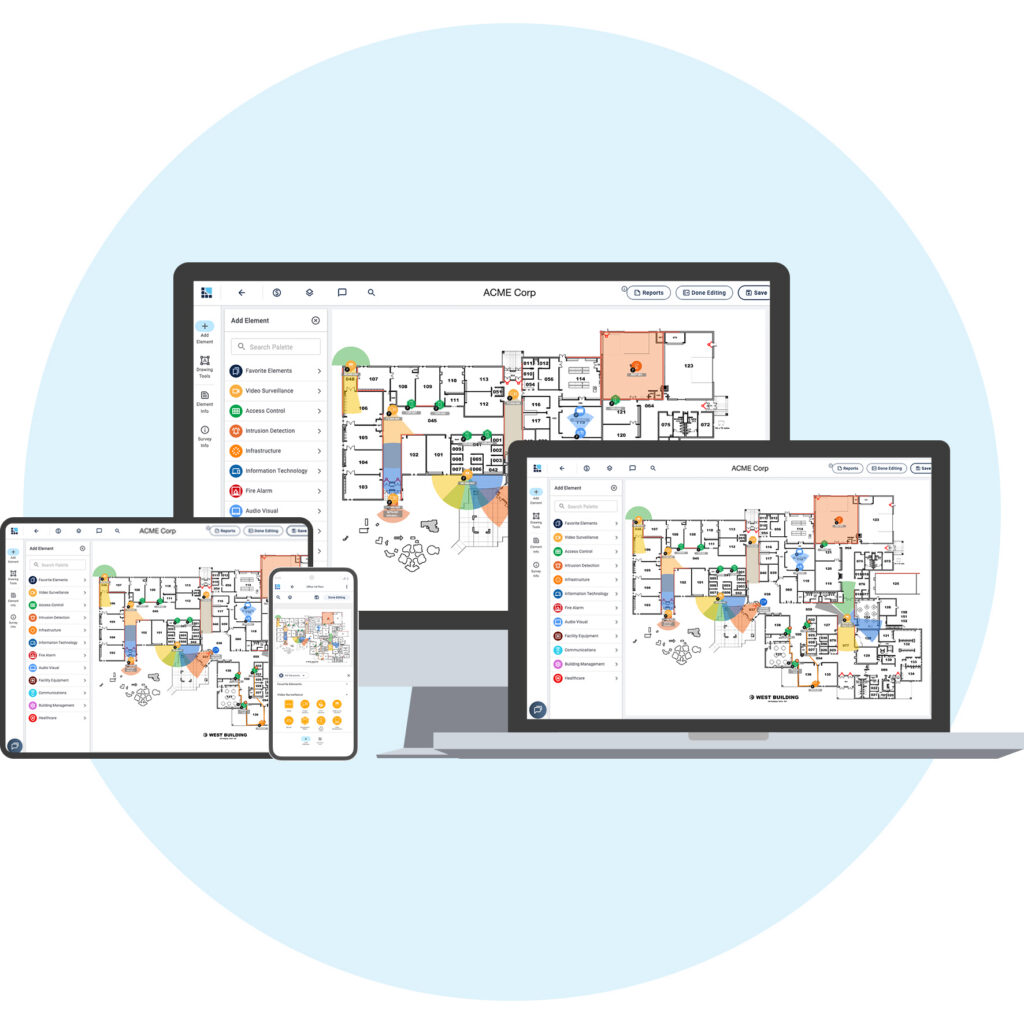
In general, a digital site survey is:
It replaces a manual process of paper floor plans, handwritten notes and emailed PDFs with a centralized digital record.
A digital site survey captures the information needed to design a physical security system for a building or campus.
Common survey elements include:
It generates a complete digital as-built addressing current conditions and future needs.
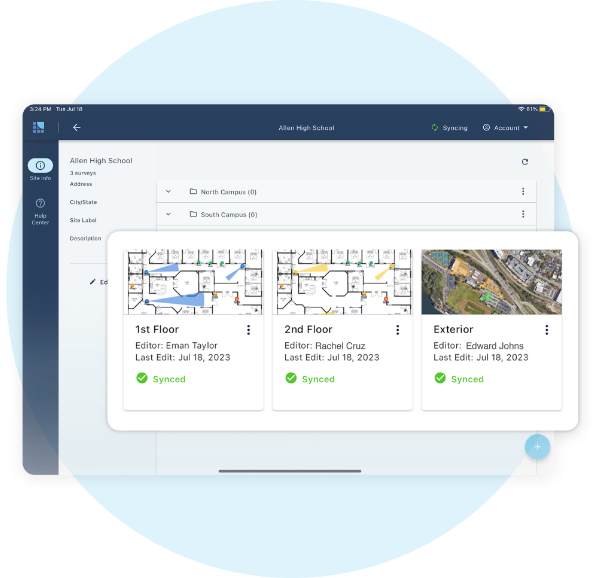
Modern system integrators and security teams use digital site surveys for several key reasons.
Digital tools reduce missed details, inconsistent documentation, and rework.
Benefits include:
When planning system upgrades, system integrators and security teams can quickly review the site remotely.
This helps with:
For organizations with multiple sites, digital surveys make it easier to compare standards across buildings.
Examples:
Digital surveys help identify vulnerabilities before they become incidents.
Common risks found:
Many industries rely on digital surveys to manage physical security system design.
Common Users
Any organization responsible for protecting people, property, or operations can benefit.

Understanding the process helps clarify how it fits into a security program.
A system integrator or security team leader reviews the facility in person.
Using cloud-based software on mobile or tablet, they capture photos and drag and drop security devices into a digital floor plan.
System integrators, clients and vendors can collaborate on the physical security system design in real time to create a digital as-built where all data is stored in a searchable, visual format.
System integrators and technology directors use the digital as-built for managing the lifecycle of the system, including upgrades, budgeting, and audits.
Organizations relying on paper and written notes or disconnected files often face:
Digital security system designs solve these problems by keeping everything centralized and accessible in one system of record.
No. It can be used for small businesses to large enterprises and single facilities to large campuses with multiple buildings and outdoor spaces.
No. It enhances the integrator’s work by completing the design process in a fraction of the time and ensuring a smooth handoff to implementation with an accurate bill of materials and report.
Yes. Many site surveys are conducted on active, occupied facilities.
Absolutely. It supports security system lifecycle maintenance, audits, expansions, and future upgrades.