
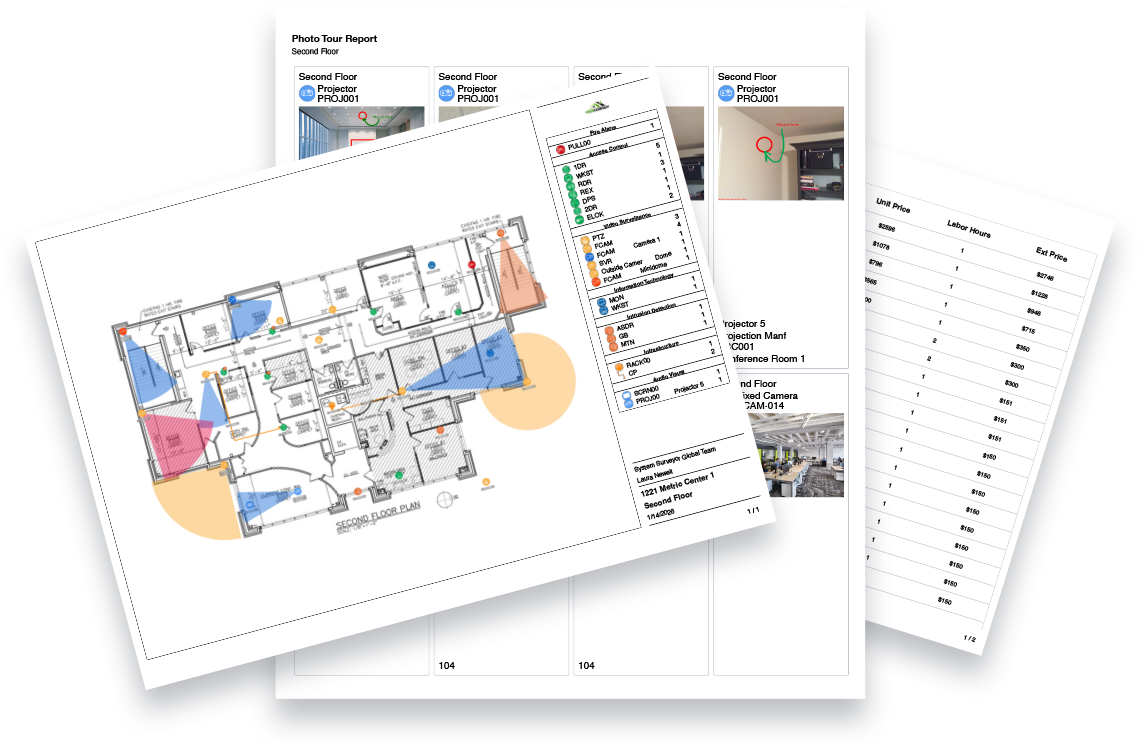
It’s a tale as old as time (or at least as old as system integration): You land a new prospect, work with them on a site survey, and get a proposal request. You work hard to craft a high-quality proposal, then deliver that proposal a week later, maybe more — only to find they’ve already signed with someone else.
You got beaten to the punch. And all that time and money spent on the prospect is usually gone for good. But why? Was it price? Competition? Speed? Or is the real problem the proposal process itself?
Physical security system integrators constantly feel pulled between two sides: technical complexity and proposal accuracy are on one side (because good proposals are both detailed and accurate). On the other side is sales velocity (because speed means more bandwidth and, ideally, more sales).
Somewhere in that mix they look for what’s affecting their integrator close rates and causing deals to stall out. Price and competition are easy targets, but instead it could be time to look at the proposal process itself. Slow processes, delayed security system proposals, and problems with accuracy all kill deals. A better, modernized process can solve all three.
Speed Kills: What’s Driving Long System Proposal Timelines
Before we show you a better way, let’s take the time to understand why the status quo isn’t working. Here’s the multi-step reality most integrators are living with:
manual site survey → back and forth pdf designs → equipment list (often incomplete, leading to more rework) → pricing → completed and signed of design > proposal document
Not only is that a whole lot of steps, but each of those steps also adds in one or more handoffs between sales and operations, internal departments, or with the client. Each one adds even more delay.
The average industry proposal timeline includes 11-20 hours of hands-on work. When you add in all the handoffs and back-and-forth exchanges to get system design and BOM details right, a week from proposal start to finish is normal.
Other bottlenecks don’t help either, like handwritten notes, photos stored in phone camera rolls, disconnected tools.
Why does this matter? The too-obvious answer is that speed (or a lack thereof) kills. If your competitor can deliver in half the time, you may have already lost (even if your proposal is better on quality).
The not-so-obvious answer? Speed is a form of trust. A fast, accurate proposal signals competence before the work even begins.
The Real Cost of a Slow Proposal
The real cost here starts with the psychology of your prospect: if you’ve done the site walk well, decision momentum will be high at that point. They put faces with names and saw you demonstrate professionalism. But that decision momentum fades quickly — especially if the prospect is entertaining other integrators and options.
The competitors who can respond faster win an advantage on perceived professionalism, and that advantage matters.
Physical security-specific stats are hard to pin down, but if we borrow insights from broader B2B sales: LeanData reports on an HBR study showing that firms waiting 24 hours to qualify a lead were 60 times less likely to land that lead than those who respond within an hour or two.
Transfer those principles back to system integration: by the time your proposal arrives, the prospect has mentally moved on or even already signed elsewhere.
The costs don’t stop at losing the sale, either. Whether you win it or lose it, you’re also incurring internal costs from slow proposals: more time from your sales team, more site visits (and revisits, which also means more truck rolls), re-quoting, and more.
Speed Matters, But So Does Accuracy
We’d be derelict in our duties if we didn’t mention the importance of accuracy. Cranking out proposals faster without maintaining (or even increasing) quality is a dangerous long-term approach. Fast but inaccurate estimates lead to major issues on customer delivery, which torpedoes your customer satisfaction and project margins. You might close more deals in the short term, but you’ll pay for it in reputation, profitability, and efficiency throughout the project.
Your Site Survey Is Either Winning or Losing the Deal
Site surveys may seem like a technical step, something used to acquire necessary information and that’s it.
But put yourself in the prospect’s shoes. Maybe your main goal is to acquire information, but the entire time you’re doing that, the prospect is watching you do it.
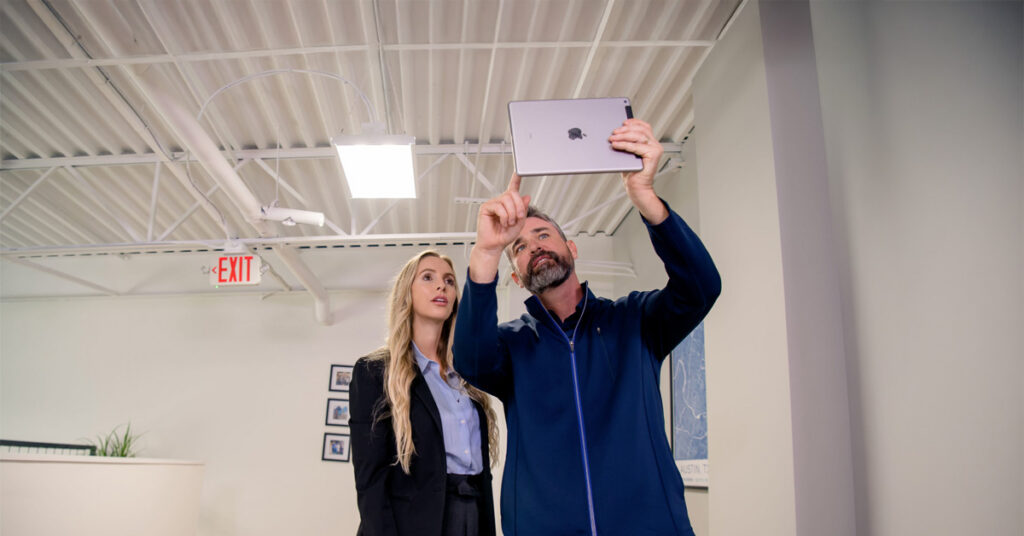
It’s a real-time evaluation of your company. Whoever you send on that site survey tells your prospect a whole lot about what working with your company will be like. The same goes for whatever tools and techniques they use.
In other words: The site survey is your first deliverable. Make it feel like one.
Proposal Quality Matters, Too
Of course, the site survey isn’t your only deliverable. The proposal itself is equally if not more important.
To get the right details into the proposal, you have to capture the right details the first time. Manual data collection creates version control problems, omissions, and rework. There’s also the possibility of a gap between what’s captured in the field and what makes it into the proposal, especially for teams still relying on legacy site survey approaches and tools.
If you have to repeatedly go back and forth after the site survey to get details straightened out with the client, you aren’t engendering client trust. Instead, you’re losing time, money, and eventually the deal itself.
Survey-to-Proposal as a Metric Worth Watching
If the site survey is your first deliverable and your proposal is the second, then the gap between the two is relevant. It’s the time between your first and second major impressions (and also the time where your prospect might be talking to other integrators). Consider implementing a new KPI, survey-to-proposal time. This KPI can help you measure progress as you modernize tools and processes.
Proposal Speed as a Competitive Advantage: Key Elements of Faster, Smarter Proposals
We’ve hammered on the point long enough: proposal speed and accuracy are top contributors to stalled proposals and lost deals. But “just get faster” isn’t real advice, so now it’s time to demonstrate a better way.
Modernizing your proposal processes around a digital site survey and physical security system design tool unlocks ways to improve both speed and accuracy. Here are a few ways how.
1. Shift from Sequential to Simultaneous
Remember the traditional process we illustrated earlier, with five steps and lots of repetition? That process is sequential: you can’t create an initial security system design until you complete the site survey, you can’t generate a security device list without the initial design, and so on. So all five steps are sequential, requiring all the back-and-forth of the previous step to be complete before you can move on.
With a modern platform for security system design and proposals, it’s possible to shift from sequential proposal development to simultaneous development. With a mobile, cloud-based platform, your field reps can capture design, equipment needs, and documentation simultaneously in the field. It’s even possible to start a real system design on site in a visuals-based system the customer can see, understand, and collaborate on.
2. Leverage the Benefits of a Digital, Automated Site Survey Tool
Switching to a single, cloud-based digital tool redefines what’s possible in site surveys and system design.
- Do floor plan markup and virtual device placement on-site, even with the customer’s real-time input if desired.
- Drag and drop security devices into a visual design that clients can see and collaborate on.
- Automatically generate equipment lists tied to the design, accounting for all parts, pieces, and underlying infrastructure.
- Create consistent, professional output, every single time.
- Reduce back-and-forth on designs and avoid rework with a standardized, seamless handoff to engineering.
All of this comes together to create powerful downstream effects: Your team can now create data-rich, visual, highly accurate proposals that go out in hours, not days.
3. Standardize to Raise Quality and Speed Simultaneously
A digital site survey and system design platform also gives integrators the ability to standardize around repeatable processes. Instead of relying on individual workflows, SIs can center on what works best and most consistently. This lowers the barrier to entry for field reps and salespeople and eliminates a degree of inconsistency between team members.
Ultimately, this kind of digital standardization enables true scalability: proven methods don’t stay locked in the heads of your most experienced team members; they disseminate across the whole team.
The cumulative effect of these elements is proven ROI for system integrators thanks to better visual tools that enable simultaneous design and consistently repeatable processes.
Faster, More Accurate Designs and Proposals Win More Business and More Hearts
When buyers receive a speedy, accurate proposal that doesn’t require unnecessary back-and-forth or repetition of details they already shared on the site walk, the result is clear: they gain confidence, and they’re more likely to close.
Polished proposals delivered quickly communicate that your team is confident and efficient, which helps reassure buyers that working with you means a quality product and a well-run installation. Faster turnaround also gives your team a chance to follow up closer to the site survey (possibly even the next day), while prospect interest is still at its highest.
Once you start to win the battle in hearts and minds, you unlock even more advantages: customers grow less critical of price when they see an accurate design from the start. Fewer surprises and fewer change orders means a smoother, faster process — and that’s really what clients are after, isn’t it?
Last, standardizing proposals around better digital tools also expands your capacity. When each bid takes half the time, you can pursue more bids with the same headcount.
Your Next Proposal Could Be Your Best Sales Tool
As we wrap up, here’s the biggest takeaway: when you rebuild your site survey, system design, and proposal processes around a modern collaborative platform, proposals transform from slow administrative tasks into a competitive differentiator. You gain the ability to work more quickly and more accurately from the jump, and you gain the tools to show those advantages to the customer from the first moments of the site walk.
Thinking of proposals as a sales tool, not an administrative burden, shifts your priorities. Now speed and quality are a system to perfect. When you do, you’ll consistently outperform system integrators still chasing the status quo.
System Surveyor helps security integrators streamline the site survey and proposal process from the field to the final document. Start a free trial today.
FAQs About Winning More Proposals
The culprit is usually a sequential process. You can’t move to the next step until the previous one wraps up. Site survey first, then design, then bill of materials, pricing, and so on. Each handoff adds delay, and before you know it, a week has gone by. The fix is shifting to a simultaneous workflow where design, equipment, and documentation happen at the same time while in the field.
It plays a bigger role than many teams assume. Right after the site walk, decision momentum is at its peak. The prospect has met your team, seen your approach, and is ready to move forward. Each day without a proposal weakens that momentum. When a competitor delivers first, they often gain an early edge in trust and perception that can be difficult to overcome.
Winning proposals are clear, aligned, and easy to say yes to. When your proposal closely matches what the customer saw and discussed during the site walk, and arrives quickly without unnecessary back-and-forth, it builds immediate confidence. That clarity, combined with a seamless professional experience, is what turns your proposal from just another quote into a decision-maker.
Digital tools bring structure to what is often an inconsistent, manual workflow. By capturing site data, design elements, and equipment requirements in one system, you eliminate common errors from missing details, version control, and miscommunication between teams. At the same time, standardized templates and workflows ensure every sales rep follows the same proven process, leading to more consistent, accurate proposals.
Start by tracking your survey-to-proposal time. It’s a simple KPI, but it reveals a lot about how efficiently your process is running. As you streamline workflows and consolidate steps into a single, connected system where your team can capture, design, and generate proposals in one motion, that timeline should steadily decrease. As it does, you will likely see the impact reflected in stronger close rates.

Maureen Carlson is co-founder and president of System Surveyor, the leading digital platform for physical-security site surveys and system design. With 25 + years in B2B SaaS and security technology, she leads the go-to-market and operations with a top notch team. Under her leadership, System Surveyor has grown into an industry-defining software used worldwide to streamline system design, enable collaboration, and raise the bar for security and technology professionals. Maureen enjoys building relationships in the industry and user community to build sustainable, high growth business. In her spare time in beautiful Austin, you’ll find her spending time outdoors, on a tennis court, reading or with family and friends.